
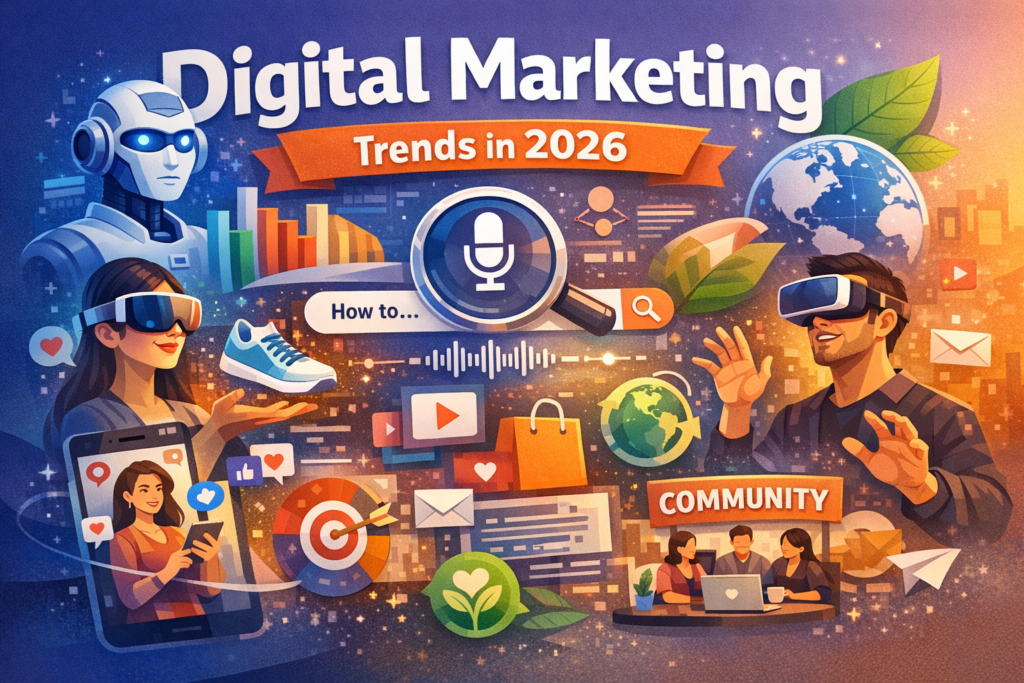
Introduction: The New Era of Digital Marketing
Digital marketing in 2026 is no longer about simply being online—it’s about being intelligent, intentional, and human-centric. As technology evolves at lightning speed, consumer behavior is shifting just as fast. Artificial intelligence, privacy-first strategies, immersive experiences, and ethical marketing are redefining how brands connect with audiences.
In 2026, businesses that adapt to these changes will thrive, while those clinging to outdated tactics risk becoming invisible. This blog explores the most impactful digital marketing trends in 2026, helping marketers, entrepreneurs, and brands future-proof their strategies and remain competitive in an increasingly crowded digital landscape.
1. AI-Driven Marketing Becomes the Core Strategy
Artificial Intelligence is no longer a “nice-to-have” tool—it is the backbone of modern digital marketing.
Key AI Applications in 2026:
Predictive analytics for customer behavior
AI-powered content generation and optimization
Smart ad targeting and automated bidding
Personalized email and website experiences
AI chatbots with emotional intelligence
Unlike earlier automation tools, AI in 2026 focuses on contextual understanding. It doesn’t just analyze data—it interprets intent, sentiment, and behavior in real time.
SEO Insight:
Search engines now favor content created with user intent in mind. AI helps marketers deliver highly relevant, search-optimized content at scale—without sacrificing quality.
2. Hyper-Personalization Powered by First-Party Data
Generic marketing messages no longer convert. Consumers in 2026 expect brands to understand their preferences, needs, and values.
What Hyper-Personalization Looks Like:
Dynamic website content based on user behavior
Personalized product recommendations
Tailored email sequences triggered by real-time actions
Region-specific and language-specific marketing
With stricter privacy regulations and the decline of third-party cookies, brands are investing heavily in first-party data—data collected directly from customers through websites, apps, and CRM systems.
Pro Tip:
Trust is currency. Brands that are transparent about data usage and provide value in exchange for data will win long-term loyalty.
3. Voice and Conversational Search Optimization
Voice search continues its rapid growth, fueled by smart assistants, wearable tech, and in-car voice systems.
Why Voice Search Matters in 2026:
Searches are more conversational and question-based
Long-tail keywords dominate
Local and intent-driven queries increase
Featured snippets and zero-click searches rise
To optimize for voice search, marketers must focus on natural language, FAQ-style content, and clear, concise answers.
SEO Strategy Tip:
Use conversational keywords like “how,” “what,” “best way to,” and structure content for quick, spoken responses.
4. Short-Form Video Continues to Dominate Engagement
Video marketing remains one of the most powerful tools in 2026—but the format has evolved.
Trending Video Formats:
Short-form vertical videos
Educational micro-content
Behind-the-scenes brand storytelling
Interactive and shoppable videos
AI-generated video personalization
Platforms prioritize content that captures attention within the first 3 seconds, making storytelling and visual hooks more important than ever.
Marketing Insight:
Authenticity beats perfection. Raw, relatable content often outperforms highly polished ads.
5. The Rise of Ethical and Purpose-Driven Marketing
Modern consumers care deeply about values, sustainability, and social impact. In 2026, ethical marketing is not optional—it’s expected.
What Purpose-Driven Brands Focus On:
Transparent business practices
Inclusive representation
Environmental responsibility
Social impact initiatives
Honest and realistic messaging
Brands that fail to align actions with values risk public backlash and loss of trust.
Branding Tip:
Purpose should be embedded into your brand story—not used as a marketing gimmick.
6. Influencer Marketing Becomes More Authentic and Niche-Focused
Influencer marketing in 2026 is less about follower count and more about credibility and community trust.
Key Influencer Trends:
Micro and nano influencers outperform mega influencers
Long-term brand partnerships replace one-off promotions
Creator-led storytelling feels more authentic
Performance-based influencer campaigns grow
Audiences are smarter and more skeptical. They value honesty, expertise, and genuine recommendations.
SEO & Branding Advantage:
Influencer content generates high-quality backlinks, social signals, and brand mentions—boosting organic visibility.
7. Immersive Experiences with AR and VR
Augmented Reality (AR) and Virtual Reality (VR) are transforming digital experiences from passive to interactive.
How Brands Use AR & VR in 2026:
Virtual product try-ons
3D product demonstrations
Interactive brand experiences
Virtual showrooms and events
Gamified marketing campaigns
These technologies reduce buyer hesitation and increase engagement by allowing users to experience products before purchasing.
Conversion Tip:
Immersive experiences significantly improve time-on-site and conversion rates.
8. Search Engines Prioritize Experience, Not Just Keywords
Search engine algorithms in 2026 focus heavily on user experience (UX).
Ranking Factors That Matter More Than Ever:
Page speed and performance
Mobile-first design
Accessibility and usability
Content depth and authority
Engagement metrics (dwell time, bounce rate)
SEO is no longer just technical—it’s experiential.
SEO Best Practice:
Create content for humans first, algorithms second. Search engines reward value, clarity, and usefulness.
9. Community-Based Marketing Gains Momentum
Brands are shifting from audience building to community building.
Community Marketing Examples:
Private social groups
Brand-hosted forums
Email-based communities
Membership programs
Exclusive digital experiences
Communities foster loyalty, feedback, and organic advocacy.
Long-Term Benefit:
A strong community reduces reliance on paid advertising and increases lifetime customer value.
10. Omnichannel Marketing Becomes Seamless
In 2026, customers interact with brands across multiple platforms—and they expect a consistent experience everywhere.
Omnichannel Strategy Includes:
Unified messaging across channels
Integrated CRM systems
Cross-platform retargeting
Consistent brand voice and visuals
Personalized customer journeys
Brands that connect all touchpoints deliver smoother, more memorable experiences.
Marketing Insight:
Consistency builds trust. Disconnected experiences break it.
11. Data-Driven Decision Making with Real-Time Insights
Marketing decisions in 2026 are powered by real-time data rather than assumptions.
Key Data Trends:
Advanced analytics dashboards
AI-driven performance insights
Predictive campaign modeling
ROI-focused strategies
Automated reporting systems
Marketers can quickly adapt campaigns based on what’s working—saving time and budget.
Conclusion: Preparing for the Future of Digital Marketing
Digital marketing trends in 2026 revolve around intelligence, personalization, authenticity, and experience. Success no longer depends on shouting the loudest—it depends on listening better, understanding deeper, and delivering real value.
Brands that embrace AI responsibly, respect user privacy, invest in meaningful content, and prioritize human connection will lead the digital future.
The question is no longer “Should we adapt?”
It’s “How fast can we evolve?”
Final SEO Keywords (Naturally Included):
Digital marketing trends 2026, future of digital marketing, AI in marketing, SEO trends 2026, content marketing strategy, influencer marketing trends, voice search optimization, digital branding, marketing automation, online marketing future.